Author: A Healthier, Happier Person

  • Find Your Fit: Exploring Different Exercise Styles to Find What You Love

    The Best Exercise is the One You’ll Actually Do
    Youth Fitness & Wellness

    The Best Exercise is the One You’ll Actually Do

    So, you’ve decided to exercise — great choice! You’ll have more energy, improved health, less stress, a clearer mind, and better sleep. But you may need help choosing where to start. Read on to find your fit.

    Start By Asking Yourself

    Past Enjoyment What activities have you enjoyed in the past? (e.g., dancing in your room or biking as a kid)
    New Adventures What’s something new you’ve always wanted to try? (e.g., yoga or tennis)
    Lifestyle Fit What can you realistically add to your current daily schedule?
    Available Resources Is there a park nearby, a yoga mat collecting dust, or free online workout videos?

    Explore Your Next Favorite Activity

    🧘 Yoga

    In yoga, you move through poses while focusing on breathing to stretch and strengthen muscles. Hatha and Restorative are great for beginners, while Vinyasa and Power yoga get your heart pumping.

    What You Need: A yoga mat.

    Why You’ll Love It: Relaxes the mind and body while toning muscles.

    ☯️ Tai Chi

    A gentle exercise like martial arts in slow motion. You move through graceful self-defense poses while breathing deeply to relieve stress and increase energy.

    What You Need: Enough space to move around and an instructional video.

    Why You’ll Love It: Improves mood, boosts energy, and tones body gentle on joints.

    🏋️ Kettlebell Workout

    Adding a kettlebell to lunges and squats engages all core muscle groups for a fast, efficient full-body strength workout.

    What You Need: A lightweight kettlebell.

    Why You’ll Love It: Builds full-body strength and burns calories rapidly.

    🏓 Pickleball

    Table tennis played on a larger court. America’s fastest-growing sport is fast-paced, highly social, and a thrilling full-body activity.

    What You Need: Paddles, a ball, and a local park/gym court.

    Why You’ll Love It: Action-packed, competitive, and super social.

    💃 Dance

    No specific rules! Just put on your favorite playlist or follow an upbeat video to get moving and boost your mood instantly.

    What You Need: Open floor space and your favorite playlist.

    Why You’ll Love It: Invigorating, joyful, and great fun!

    👟 Walking

    The easiest activity to stick with. Walk with a friend, listen to a podcast, or stroll in a local park for 30 minutes a day.

    What You Need: Comfortable walking shoes.

    Why You’ll Love It: Versatile and awesome for long-term health.

    🤸 Pilates

    Controlled strength training that targets core muscles (abs and lower back) to improve posture, coordination, and overall balance.

    What You Need: A mat, small towel, and video guide.

    Why You’ll Love It: Long, lean look with improved posture and flexibility.

    ⚡ HIIT (High-Intensity Interval Training)

    Quick bursts of 20-second extreme activity (sprinting, jumping rope) followed by 10 seconds of rest.

    What You Need: Jump rope or simply bodyweight space.

    Why You’ll Love It: Full workout benefits in a fraction of the time.

    🔥 Fitness Mini Challenge

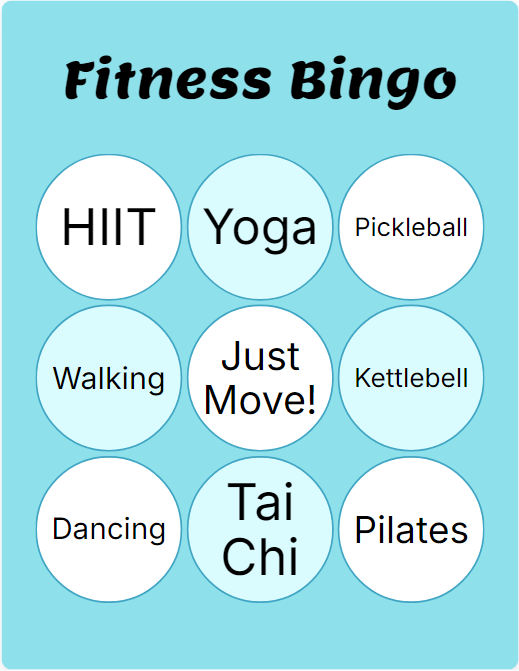
    Still not sure which one fits you? Try them all with our community challenge!

    • Try each of the 8 activities at least once (adapt to your fitness level).
    • Mark off each activity after giving it a go.
    • Complete the entire card — no shortcuts!
    • Take a picture of your completed card and share it on social media.
    #AHHMFitAndFearless #AHHMMoveWithUs
    Note: AHHM does not provide clinical therapy. We provide free health education workshops and community tools.

    The best exercise is the one you’ll actually do. 

    So, you’ve decided to exercise — great choice! You’ll be glad you did. You’ll have more energy, improved health, less stress, a clearer mind, and better sleep. But you may need help choosing where to start. There are many options! Read on to find your fit.  

    Start by asking yourself:  

    • What activities have you enjoyed in the past? 
    • What’s something new you’ve always wanted to try?  
    • What can you realistically add to your lifestyle?  

    For example: 

    • Did you love biking as a kid? 
    • Have you ever had fun dancing in your room? 
    • Do you enjoy walks in the park or a friendly basketball game? 
    • Have you always wanted to try yoga or tennis? 

    Your answers are clues to the kind of movement you’ll enjoy now and keep doing. If you need more inspiration, these quizzes can help match your personality and goals to the perfect workout: 

    Next, think about what’s already available to you: 

    • Is there a park nearby?  
    • A community center?  
    • Do you have a set of hand weights, resistance bands, or a yoga mat collecting dust?  
    • Do you have internet access or a streaming service? (These often offer workout videos for free or at a low cost!) 

    Now that you know some basics, let’s explore some fun workout options that could become your new favorite activities! 

    Hopefully, you’re excited about trying one of these activities. Still not sure? Do this fitness mini challenge to try them all! 

    Yoga

    In yoga, you move through different poses while focusing on your breathing to stretch, strengthen, and tone your muscles. These can feel awkward at first, but that changes with practice. Soon, you’ll feel like you’re flowing through them. Yoga has different styles. Hatha and Restorative yoga are great for beginners. They focus on relaxing the mind and body while slowly moving through the poses. More active forms are Ashtanga, Vinyasa, and Power yoga. These quicker movements get your heart pumping. 

    • What you’ll need: A yoga mat. 
    • Why you’ll love it: It relaxes the mind and body while toning your muscles. 

    Tai Chi

    Have you ever seen people moving slowly through graceful poses at a park? They were probably doing Tai Chi, a gentle exercise like martial arts but slower and more approachable. You slowly move through different self-defense poses while breathing deeply. It’s good for most people and easy to learn.  Like yoga, Tai Chi also has several styles. Some are flowing. Some seem like dancing. Others are more like traditional martial arts with kicking and punching. 

    • What you’ll need: A space big enough to move around in and a Tai Chi video.  
    • Why you’ll love it: It improves your mood, increases energy, and tones your muscles. 

    Kettlebell Workout

    A kettlebell weight looks like an iron ball with a thick, rounded handle. You hold or lift it while lunging, squatting, and repeating exercises you probably know from PE class.  Adding the kettlebell to your workout helps you use all your muscles. (To avoid injury, make sure you learn the proper forms for these exercises first!) 

    • What you’ll need: A lightweight kettlebell. 
    • Why you’ll love it: It’s efficient, builds full-body strength, and burns calories fast.  

    Pickleball

    Maybe you’re not into poses, slow moves, or repeated lunging. Maybe you want some bigger action—some competition. Try pickleball. What is it?  Basically, pickleball is table tennis (ping-pong) played on a bigger court. And people love it! It’s the fastest-growing sport in America.  

    • What you’ll need: Paddles, a ball, and a court (check local parks or gyms). 
    • Why you’ll love it: It’s fast-paced, social, and a full-body workout. 

    Dance

    Everyone can dance! You don’t have to dance any specific way. Just move your body while listening to your favorite tunes or following along to an upbeat dance video. 

    • What you’ll need: A space to move around in and your playlist. 
    • Why you’ll love it: It’s invigorating and fun! 

    Walking

    The easiest activity to choose for exercise, walking needs no explanation! You can walk with a friend, as you listen to something (music, podcast, book), at a park, or in the comfort of your living room. Plan to walk at a steady pace for 30 minutes a day (this can be broken up throughout the day).   

    • What you’ll need: Walking shoes and a plan for where you’ll walk (or a walking video if exercising indoors). 
    • Why you’ll love it: It’s awesome for your overall health and versatile!  

    Pilates

    This is a form of strength and resistance training. You work through a series of slow, controlled movements and breathing that build up your core muscles (lower back and abs). 

    • What you’ll need: A mat, a small towel, and a Pilates video. 
    • Why you’ll love it: You’ll get a long, lean look while improving your posture, flexibility, balance, and coordination. 

    HIIT

    High-Intensity Interval Training is a workout that involves about 20 seconds of extreme activity (like sprinting, cycling, or jumping rope) followed by 10 seconds of rest, then repeat.  

    • What you’ll need: This varies depending on the activities you choose. 

    You’ll never know what you like unless you try it! Here’s how to complete the challenge:  

    • Try each activity at least once. Remember to modify or adapt exercises to your fitness level. 

    • Mark off each activity after you give it a go. 

    • You win when you’ve completed the entire card—no shortcuts!
       

    • Once you’ve done them all, take a picture of your completed card and share it with us using hashtags

      #AHHMFitAndFearless and #AHHMMoveWithUs. 
  • Adding Laughter to Your Diet 

    Adding Laughter To Your Diet – Daily Multivitamin for Wellness
    Mental & Physical Wellness

    Adding Laughter To Your Diet — Your Daily Multivitamin!

    It’s like your daily multivitamin — but way more fun! We all know how good it feels to laugh, but laughter isn’t just fun: it’s incredibly good for your physical and mental health. According to the Mayo Clinic, laughter creates both immediate and long-term positive effects on your well-being.

    The “Nutritional Facts” of Laughter

    ⚡ Short-Term Benefits

    Stimulates Major Organs

    Increases intake of oxygen-rich air, stimulating heart, lungs, and muscles while releasing feel-good endorphins in the brain (Mayo Clinic).

    Relieves Stress Response

    Activates and then cools down your stress response, reducing tension and creating a relaxed state (National Institutes of Health).

    Soothes Muscle Tension

    Improves circulation and relaxes muscles, easing physical stress symptoms like headaches and tight shoulders.

    🛡️ Long-Term Benefits

    Strengthens Immune System

    Positive thoughts trigger neuropeptides that combat stress and illness, bolstering long-term immunity.

    Eases Body Pain

    Triggers the body to produce its own natural painkillers as a complement to pain management (Journal of Behavioral Medicine).

    Improves Overall Mood

    Reduces symptoms of anxiety and depression while elevating self-esteem and lasting happiness.

    Simple Ways to Add Laughter to Your Routine

    📺
    Stream Your Favorite Comedy

    Watch a favorite sitcom, stand-up special, or hilarious clip. Studies show humor-based entertainment reduces stress and supports heart health.

    👯‍♂️
    Spend Time with Funny Friends

    Laughter is contagious! Surround yourself with people who make you laugh, and you’ll naturally feel lighter and more connected.

    📱
    Follow Light-Hearted Creators

    Explore uplifting social accounts, funny web comics, or comedy podcasts for a quick, positive pick-me-up during breaks.

    🐶
    Find Joy in Everyday Quirks

    Embrace small, silly moments — laugh at your pet’s goofy behavior or your own impromptu dance moves in the kitchen!

    🚀 The Ultimate Wellness Hack

    Laughter is like hitting a reset button for your brain. By managing stress and triggering endorphins, laughter helps your body function more efficiently (NIH). Do what brings you joy — do what makes you laugh!

    Laughter is Free, Accessible & Best Medicine! ✨
    Note: AHHM does not provide clinical therapy. We provide free health education workshops and tools.

    It’s like your daily multivitamin—but way more fun! 

    We all know how good it feels to laugh, like when a joke hits just right, and you can’t stop giggling. But did you know that laughter isn’t just fun, but it’s also incredibly good for your health? Whether it’s reducing stress, improving your mood, or even boosting your immune system, laughter has some serious benefits. According to the Mayo Clinic, laughter can create both immediate and long-term positive effects on your physical and mental well-being. 

    So, why not make laughter a regular part of your wellness routine? Let’s explore why it works and how you can add more of it to your daily life. 

    The “Nutritional Facts” of Laughter 

    When it comes to improving your health, laughter is like a superfood, loaded with benefits and no bad side effects. Here’s what it can do for you: 

    Short-Term Benefits 

    • Stimulates Major Organs: Laughing increases your intake of oxygen-rich air, which stimulates your heart, lungs, and muscles while triggering the release of feel-good endorphins in your brain. These chemicals are responsible for that burst of happiness you feel after a good laugh (Mayo Clinic). 
    • Relieves Stress: A hearty laugh activates and then cools down your stress response, reducing tension and helping you feel more relaxed (National Institutes of Health). 
    • Soothes Tension: Laughter can also improve circulation and relax muscles, easing physical symptoms of stress, like headaches and tight shoulders. 

    Long-Term Benefits 

    • Strengthens the Immune System: Positive thoughts triggered by laughter release neuropeptides that help combat stress and illness, while negative emotions can weaken your immunity. 
    • Eases Pain: Laughter triggers the body to produce natural painkillers, making it a great complement to traditional pain management strategies (Journal of Behavioral Medicine). 
    • Improves Mood: Regular laughter can help reduce symptoms of anxiety and depression while boosting self-esteem and overall happiness. 

    Whether it’s a quick laugh or a full-on laughing fit, the benefits add up, making laughter a key ingredient for better health. 

    How to Add Laughter to Your Life 

    You don’t have to wait for a comedy show or a hilarious meme to get your laugh fix. Here are some simple, practical ways to incorporate laughter into your daily routine: 

    • Stream Your Favorite Comedy: Watch a sitcom, stand-up special, or funny video to boost your mood instantly. Studies show that humor-based entertainment can reduce stress and even improve heart health. 
    • Spend Time with Funny Friends: Laughter is contagious! Surround yourself with people who make you laugh, and you’ll naturally feel lighter and more connected. 
    • Follow Humor Creators Online: Explore light-hearted content like funny comics, uplifting social media accounts, or humor-focused podcasts for a quick pick-me-up. 
    • Find Joy in Everyday Moments: Don’t underestimate the power of small, silly moments, like laughing at your dog’s goofy behavior or your own dance moves in the kitchen. 

    And remember, humor doesn’t have to be perfect to work. It’s all about finding something positive that makes you laugh. 

    Why Laughter Is the Ultimate Wellness Hack 

    When life gets overwhelming, laughter is like hitting a reset button for your brain. It helps you focus on the present, manage stress, and maintain perspective. Plus, laughter promotes a sense of connection with others, creating stronger bonds and building emotional resilience. 

    Beyond mental health, laughter even supports physical wellness. Did you know chronic stress can contribute to weight gain? By reducing stress and triggering those “feel-good” endorphins, laughter helps your body relax and function more efficiently (NIH). While it won’t replace your workouts (sorry!), adding humor to your day might just be the extra boost you need to reach your health goals. 

    The Bottom Line 

    Laughter truly is the best medicine. It’s free, accessible, and comes with benefits that range from easing stress to strengthening your immune system. Whether you’re cracking jokes with friends, streaming a hilarious movie, or simply laughing at life’s little quirks, you’re doing your mind and body a world of good. 

    So, the next time someone says, “Do what brings you joy,” take it literally. Do what makes you laugh! It’s one of the simplest ways to create a healthier, happier version of yourself. And who doesn’t want that? 


    References 

    Louie, D., Brook, K., & Frates, E. (2016). The laughter prescription: A tool for lifestyle medicine. American journal of lifestyle medicine, 10(4), 262–267. https://doi.org/10.1177/1559827614550279 

    Lyubomirsky, S. (Ed.). (n.d.). Create joy and satisfaction. Mental Health America; Mental Health America, Inc. Retrieved November 25, 2024, from https://mhanational.org/create-joy-and-satisfaction 

    Mayo Clinic Staff. (2023, September 22). Stress relief from laughter? It’s no joke. Mayo Clinic; Mayo Foundation for Medical Education and Research. https://www.mayoclinic.org/healthy-lifestyle/stress-management/in- depth/stress-relief/art-20044456.  

    Robinson, L., Smith, M., & Segal, J. (2024, February 5). Laughter is the best medicine. HelpGuide.org; HelpGuide.org. https://www.helpguide.org/mental-health/wellbeing/laughter-is-the-best-medicine 

    van der Wal, C. N., & Kok, R. N. (2019). Laughter-inducing therapies: Systematic review and meta-analysis. Social Science & Medicine, 232, 473–488. Science Direct. https://doi.org/10.1016/j.socscimed.2019.02.018 


  • The 80/20 Rule: Nourish Your Body Without Torturing Your Tastebuds

    The 80/20 Rule – A Balanced Approach to Eating
    Nutrition & Healthy Living

    The 80/20 Rule: A Balanced Approach to Eating

    The 80/20 rule is an approach that can revolutionize your eating habits if you’re seeking a balanced dietary plan. It’s not about rigid diets; it’s about embracing life’s flavors while giving your body the love it deserves. Simply put: 80% nutrient-dense food and 20% whatever you choose!

    How the 80/20 Breakdown Works

    80%

    Nutrient-Dense Wonders

    A colorful feast of vibrant veggies, lean proteins, wholesome grains, and heart-healthy fats designed to nourish and fuel your body.

    20%

    Golden Treats

    Your pass to indulge in foods that make your taste buds dance — a slice of cake, cheese delights, or favorite comfort foods.

    A Peek at What the 80% Looks Like

    🥗
    Veggies & Fruits

    Load up on a vibrant rainbow of colorful fruits and vegetables to snag a wide variety of essential vitamins and nutrients.

    🍗
    Lean & Plant-Based Protein

    Opt for lean protein sources to keep your body fueled and strong. Sprinkle in plant-based powerhouses like beans or tofu for a delicious twist.

    🌾
    Wholesome Grains

    Swap out refined grains for whole grains. Toss quinoa into your white rice for an extra boost of fiber and protein goodness!

    🥛
    Low-Fat Dairy Options

    Fat-free or low-fat dairy helps reduce saturated fat intake while supplying essential calcium and vitamin D for strong bones.

    🥑
    Heart-Healthy Fats

    Use beneficial oils like olive or avocado oil. Nuts and seeds in moderation are also fantastic sources of healthy fats.

    🌱 Sustainable Lifestyle Over Crash Diets

    Crash diets are not the vibe! We’re all about long-term, sustainable habits that stick for life. Studies show having support from friends or family helps dramatically with consistency.

    Team up with a buddy & tag us on social media! 🤝
    Note: AHHM does not provide clinical therapy. We provide free health education workshops and tools.

    Hey there!

    Let’s delve into the 80/20 rule—an approach that could revolutionize your eating habits if you’re seeking a balanced dietary plan. But hold up, before you brush it off as just another health trend, let’s unpack what this rule is really about. It’s not about rigid diets; it’s about embracing life’s flavors while giving your body the love it deserves.

    The 80/20 Rule is a common method used by a lot of healthy people for a balanced diet. Simply put, 80% of your foods are nutrient dense and the other 20% can be whatever you choose. 

    Picture this: 80% of your meals are a colorful feast of nutrient-packed wonders—think vibrant veggies, lean proteins, wholesome grains, and those oh-so-good-for-you fats. Now, what about the remaining 20%? That’s your golden ticket to indulge in the foods that make your taste buds dance—whether it’s a luscious slice of cake, a cheesy delight, or your go-to comfort food.

    Here’s a peek at what that 80% looks like:

    Veggies and Fruits: Load up on a rainbow of colorful fruits and veggies to snag a variety of essential nutrients.

    Protein: Opt for lean protein sources to keep your body fueled and strong. Don’t forget that you can also sprinkle in some plant-based powerhouses like beans or tofu for a delicious twist.

    Grains: Swap out refined grains for whole grains whenever you can. And hey, why not toss some quinoa into your white rice for an extra boost of goodness?

    Dairy: Opting for fat-free or low-fat dairy products can help reduce saturated fat intake while still providing essential nutrients like calcium and vitamin D.

    Healthy Fats: Using heart-healthy oils like olive or avocado oil adds beneficial fats to meals. Nuts and seeds are also excellent sources of healthy fats and provide satiety when consumed in moderation.

    What we are saying is that crash diets are not the vibe we’re going for. We’re all about finding sustainable, long-term lifestyle changes that stick. It’s not about getting healthy for a few weeks or months—it’s about staying healthy for life. So, let’s roll up our sleeves and figure out what works for you, because, darling, you deserve a lifetime of health and happiness. 

    Oh, and researchers say that having support from friends or family helps with sticking to this rule. So, team up with a buddy and keep each other motivated! Check in with us on social media to let us know how your 80/20 journey is going!


    Lemstra, M., Bird, Y., Nwankwo, C., Rogers, M., & Moraros, J. (2016). Weight loss intervention adherence and factors promoting adherence: A meta-analysis. Patient Preference and Adherence10, 1547-1559. https://doi.org/10.2147/PPA.S103649

    References:

    USDA (n.d.). Dietary Guidelines. Https://www.Dietaryguidelines.gov/Resources/2020-2025-Dietary-Guidelines-Online-Materials. https://www.dietaryguidelines.gov/sites/default/files/2021-03/Dietary_Guidelines_for_Americans-2020-2025.pdf


    Attribution: © Alex Haney , Unsplash

  • Nurturing Healthy Habits: A Guide to Train Your Child’s Taste Buds

    Eating Healthy in College – Improve Your Diet & Have Fun
    College Life & Nutrition

    Eating Healthy in College — Improve Your Diet & Have Fun Doing It!

    It’s 9 PM, you’ve got a paper due, and dinner is whatever you can order in three taps or grab from the dining hall. Sound familiar? The problem isn’t willpower — nobody ever showed you how to eat well when you’re short on time, money, and counter space!

    🍳

    Did you know? Harvard Medical School reports that “the more people cook at home, the healthier their diet, the fewer calories they consume, and the less likely they are to develop type 2 diabetes.”

    Free Student Recipe Guides

    Even with limited dorm space, these curated links offer quick and affordable meal ideas:

    USDA Meal Kits

    College budget meals designed specifically for SNAP and student budgets.

    Explore USDA Meals →

    EatingWell Gallery

    Easy, cheap, and highly nutritious college recipes you can prep fast.

    View EatingWell Recipes →

    PHA Dorm Recipes

    Partnership for a Healthier America’s guide to meals made in a dorm room.

    Dorm Room Guide →

    Smart Hacks for Cooking on a Student Budget

    🍱
    Batch Cook & Freeze

    One cooking session can provide meals for several days. Cook in bulk and freeze single-serving portions to reheat later, saving time and cutting food waste.

    📱
    Use Meal Planning Apps

    Try Mealime for 30-minute recipes or Paprika to save web recipes. Stick to a grocery list so you aren’t tempted by expensive extras.

    🛒
    Budget Ingredient Sourcing

    Buy store brands, purchase in bulk, or check if your college has a free food pantry. Look for thrift store pots and team up with roommates for pantry staples like rice, beans, and spices.

    🧊
    Inexpensive Proteins & Frozen Veggies

    Focus on budget proteins like eggs, canned tuna, or chicken thighs. Frozen fruits and veggies last longer, cost less, and are just as nutritious as fresh produce.

    👩‍🍳 Cooking as Stress Relief & Social Connection

    Cooking puts you in a peaceful flow state, helping you focus on tactile tasks instead of spinning out with exam stress or intrusive thoughts. Experiment with global flavors, cook with friends, and skip the cafeteria once in a while!

    Your body and mind will thank you! ✨
    Note: AHHM does not provide clinical therapy. We provide free health education workshops and tools.

    1. Start Early, Start Strong
    Introduce a variety of flavors early on. Babies are naturally curious, so offer a spectrum of tastes to cultivate their palate. From sweet potatoes to avocados, diversity is key!

    2. Lead by Example
    Your child learns by observing, so let them see you enjoying nutritious meals. Share family meals together; this not only fosters bonding but also sets a positive example.

    3. Make Food Fun
    Transform mealtime into an engaging experience. Get creative with shapes, colors, and arrangements on the plate. Let them dip veggies into hummus or arrange fruit slices into smiley faces. Making food visually appealing can pique their interest.

    4. Involve Them
    Take your child grocery shopping and involve them in meal preparation. This encourages a sense of ownership and curiosity about what they eat.

    5. Patience and Persistence
    Remember, it’s a journey! Be patient and persistent. It might take multiple attempts for a child to accept a new food. Encourage but don’t force; let them explore at their own pace.

    6. Offer Healthy Snack Options
    Keep healthy snacks readily available. Instead of chips or cookies, offer alternatives like nuts, fruits, yogurt, or homemade snacks like veggie sticks or baked goods with wholesome ingredients.

    7. Celebrate the Victories
    Praise and celebrate successes. When they willingly try a new food or show interest, acknowledge and appreciate their effort. It reinforces positive behavior.


    By gently introducing a range of flavors and maintaining a positive environment around mealtime, you can help your child develop a love for nutritious foods that will benefit them for life.


    Attribution: © xixinxing, 123RF Free Images


  • Shifting Your Mindset: The Game-Changer in Life

    Shifting Your Mindset – Fixed vs. Growth Mindset
    Personal Growth & Psychology

    Shifting Your Mindset — Fixed Mindset vs. Growth Mindset

    Ever felt stuck, facing a challenge that seems impossible to conquer? That’s where our mindset comes into play — cue the two contrasting mindsets: the “Fixed Mindset” and the “Growth Mindset.” Picture this: a life-transforming face-off between limitations and endless possibilities.

    The Two Mindsets: Locked Door vs. Open Road

    🔒 Fixed Mindset: The Locked Door

    The fixed mindset tells you, “You’re just not built for this.” It’s those moments when we label ourselves as “not good enough” or fear failure because it might confirm our limitations. This mindset keeps us trapped in our comfort zones, avoiding risks to protect a fragile sense of competence.

    🌱 Growth Mindset: The Open Road

    The growth mindset whispers, “You may not know it yet, but you can learn.” It thrives on the idea that challenges are opportunities and failures are stepping stones. This mindset says, “Bring it on!” — seeing setbacks as lessons and embracing the thrill of continuous growth.

    Navigating Life’s Twists and Turns

    🗺️
    Obstacles Become Chances to Grow

    Imagine taking on challenges armed with a growth mindset. Suddenly, obstacles aren’t insurmountable barriers; they are active opportunities to evolve and adapt.

    Relish the Journey of Learning

    Instead of fearing failure, you begin enjoying the journey of discovery. You learn to adapt, evolve, and uncover entirely new possibilities along the way.

    🧭
    Redraw Your Mental Map

    Remember, mindsets aren’t set in stone — they are mind maps you can redraw anytime. Cultivating a growth mindset is a conscious choice that builds true resilience.

    🚀 Unleash Your Full Potential

    By embracing a growth mindset, you’re rewiring your entire outlook. Challenges become thrilling adventures, failure becomes a lesson, and learning becomes an empowering journey. Embrace the unknown, celebrate your effort, and watch yourself soar!

    Choose Growth & Redraw Your Mind Map ✨
    Note: AHHM does not provide clinical therapy. We provide free health education workshops and tools.

    Ever felt stuck, facing a challenge that seems impossible to conquer? That’s where our mindset comes into play—cue the two contrasting mindsets: the “Fixed Mindset” and the “Growth Mindset.” Picture this: a life-transforming face-off between limitations and endless possibilities.

    Fixed Mindset: The Locked Door
    The fixed mindset is like a locked door—it tells you, “You’re just not built for this.” It’s those moments when we label ourselves as “not good enough” or fear failure because it might confirm our limitations. This mindset keeps us in our comfort zones, avoiding risks to protect our fragile sense of competence.

    Growth Mindset: The Open Road
    Now, the growth mindset is the open road—it whispers, “You may not know it yet, but you can learn.” It thrives on the idea that challenges are opportunities and failures are stepping stones. This mindset says, “Bring it on!” It’s about seeing setbacks as lessons and embracing the thrill of growth.

    🌟 Navigating Life’s Twists and Turns
    Imagine taking on challenges armed with this growth mindset. Suddenly, obstacles aren’t barriers; they’re chances to grow. You’re not fearing failure; you’re relishing in the journey of learning and discovery. It’s about adapting, evolving, and discovering new possibilities.

    💡 Unleash Your Potential
    Remember, mindsets aren’t set in stone; they’re more like mind maps that you can redraw. Cultivating a growth mindset is a conscious choice—one that opens doors to new skills, resilience, and endless possibilities. By embracing a growth mindset, you’re rewiring your entire outlook. Challenges become adventures, and learning becomes a thrilling ride. So, embrace the unknown, celebrate your efforts, and watch as you soar to new heights!


    ✨🌱 #MindsetMatters #AdventureAwaits #EmbraceGrowth 🌱✨


    Attribution: © nuevoimg, 123RF Free Images

  • Sweating It Out for a Happier, Healthier You

    Sweating it out for a healthier, happier you
    Active Living & Movement

    Sweating It Out for a Healthier, Happier You

    Let’s dive into the world of that “E” word — the activity that gets your heart racing and your sweat glands throwing a party. Yep, you guessed it: exercise! Exercise is your daily energy shot, boosting both body and mind. Whether it’s pounding the pavement or a playful sprint with your furry friend, movement is a joyful part of life.

    CDC Recommended Movement Goals

    150+

    Minutes Per Week

    Adults should aim for at least 150 minutes of moderate-intensity exercise weekly. Break it down however fits your lifestyle best!

    2 Days

    Muscle Strengthening

    Dedicate a couple of days each week to activities that build strength in major muscle groups.

    Break It Down — Every Movement Counts

    Feeling overwhelmed? Exercise isn’t exclusive to fitness enthusiasts. It’s for everyone! Try adding these simple movements to your day:

    🚶‍♀️
    Brisk Walking
    💃
    Living Room Dance
    🪴
    Home Gardening
    🐕
    Park Run with Dog
    Hula Hooping
    😂
    Laughter Mini-Workouts

    🎉 Exercise Isn’t Punishment — It’s a Celebration!

    More than just sculpting muscles, exercise is about crafting a healthier, happier version of yourself. Grab a hula hoop, hop around, or strut your stuff. Every movement adds up!

    Lace up, cue your tunes, and remember: Sweat is just fat shedding tears! 💦
    Note: AHHM does not provide clinical therapy. We provide free health education workshops and tools.


    Let’s dive into the world of that “E” word — the activity that gets your heart racing and your sweat glands throwing a party. Yep, you guessed it: exercise! Exercise is your daily energy shot, boosting both body and mind. Whether it’s the invigorating rhythm of pounding the pavement or the playful sprint around the park with your furry friend, it’s a joyful part of life. But how much is enough? According to the CDC, adults should aim for at least 150 minutes of moderate-intensity exercise per week, along with a couple of days dedicated to muscle-strengthening activities. Feeling overwhelmed? Break it down — a brisk walk, a dance session in your living room, or even some gardening all count. Just keep moving! Exercise isn’t exclusive to gym buffs or fitness enthusiasts. It’s for everyone — from those who occasionally opt for a cheat meal to those who consider laughter a mini-workout. More than just sculpting muscles, it’s about crafting a healthier version of yourself. No need for Herculean efforts; a stroll, a living room dance party, or a good laugh — they all count as mini-workouts. For those not sold on traditional exercise routines, remember, it’s not punishment; it’s a celebration of your body. Grab a hula hoop, hop around, strut your stuff! Every movement adds up. So, lace up those shoes, cue up your favorite tunes, and remember, that sweat? It’s just your fat shedding tears. It’s time to embrace the joyous side of exercise.

    Attribution: © virtosmedia, 123RF Free Images